Becoming Soil
Installation, video, sound, drawing
I came to soil through death.
I have been afraid of death since I was a child. My body felt strange to me, as if a thin layer of glass stood between me and the world, and under it was the awareness that bodies end.
When my grandfather died, I was eighteen. At Behesht Zahra, Tehran's central cemetery, I watched grief turn into procedure.
In 2024 my question began to shift from death itself to what happens to the body after it. Soil became the way to think it through. It is matter, and it is alive. Things break down in it and become something else. Maria Puig de la Bellacasa writes about “care time,” paying attention to what is already alive in the soil. I began to ask whether attention itself can be a form of care.
When the anxiety comes, I put my hands in soil, close my eyes and breathe. It does not erase the fear. It gives me somewhere to place it.
But my relationship with soil was also one of taking. I took it from graves and from my garden and carried it away in plastic bags. At Geertjesgolf, a sand extraction site, I stood on the machines and watched the land being separated and carried off to become roads and houses. My gestures were smaller, but they belonged to the same logic.
Donna Haraway asks us to stay with the trouble. This is where my work stays. Nothing is resolved.
I came to the soil to understand death. I stayed because it was teaching me how to stay alive, and how to live.
Wind Will Carry
This was the first work I made when I began researching death, and grief was part of it from the beginning.
I collected fallen autumn leaves and arranged them on an empty stone chair in the garden of Remonstrantse Kerk. Throughout the exhibition, I tended to them and kept the wind from scattering them. At the end, I sat on the ground beside the chair and watched the wind carry them away.
I wonder where they are now. Perhaps they have already become soil.
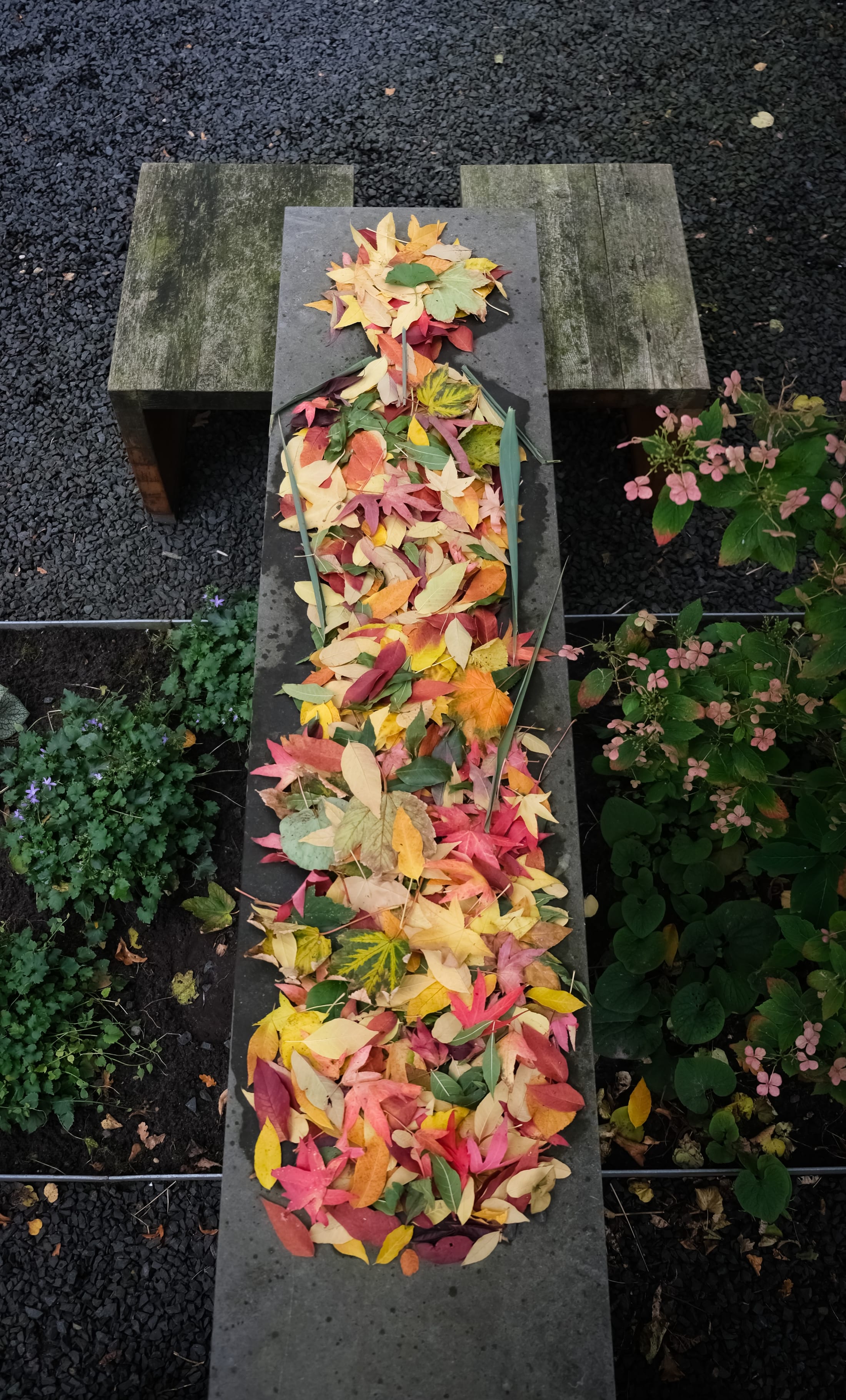
Wind Will Carry, 2024. Collected autumn leaves. Installation view.
De-Compost
At every burial I attended, the same verse was said: “We made you from soil; we will return you to this soil; we will raise you again from this soil.” (Quran 20:55, my translation.) Like “dust to dust,” I had always heard it as a prayer. I started to see it as a material process that my body will go through one day.
I collected small amounts of soil from the planted parts of graves in Groningen cemeteries and brought it to my studio. I added my own hair and nails and placed small samples under a microscope. The hair and nails stayed there as I watched, slowly mixing with the soil.
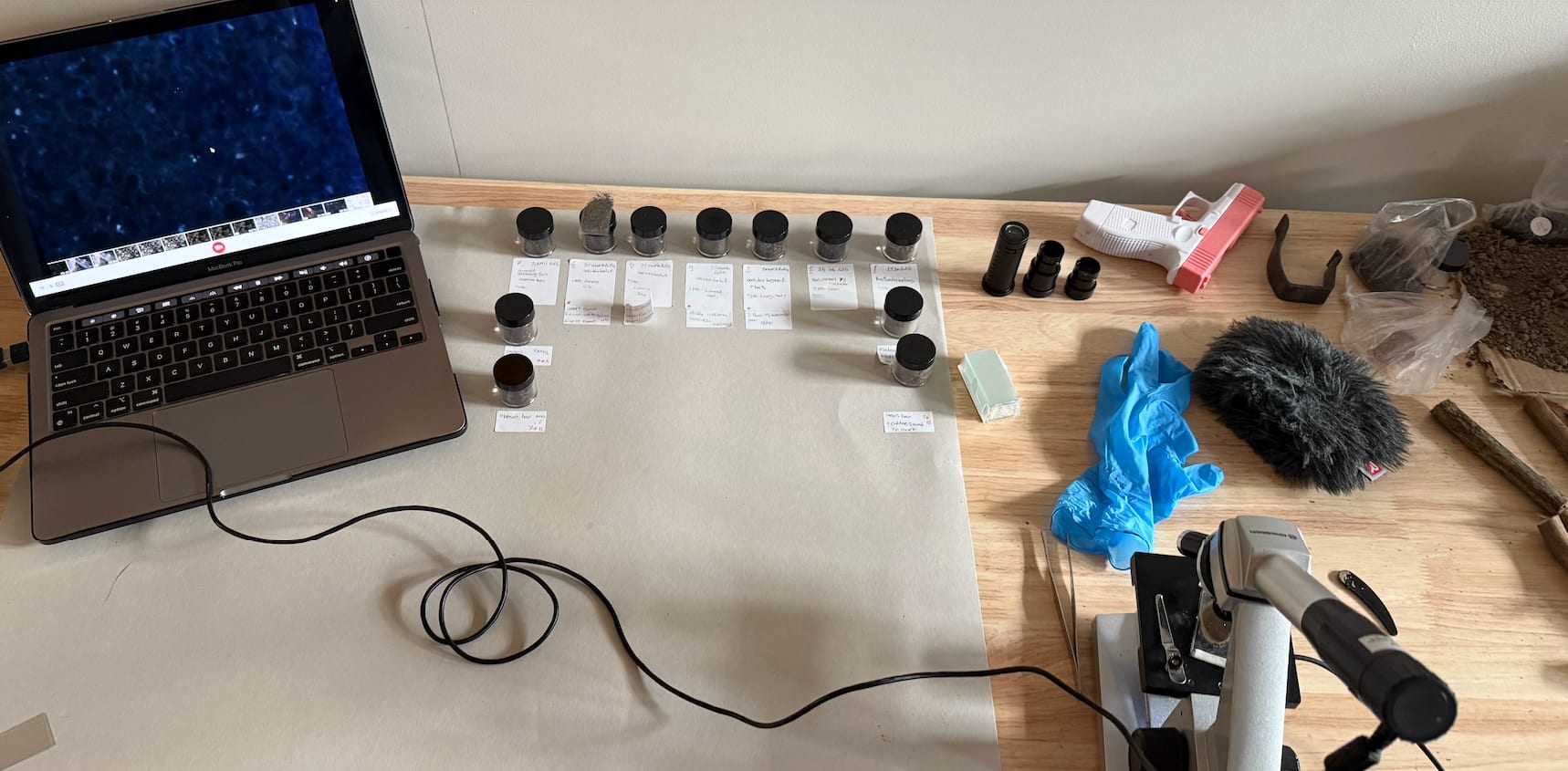
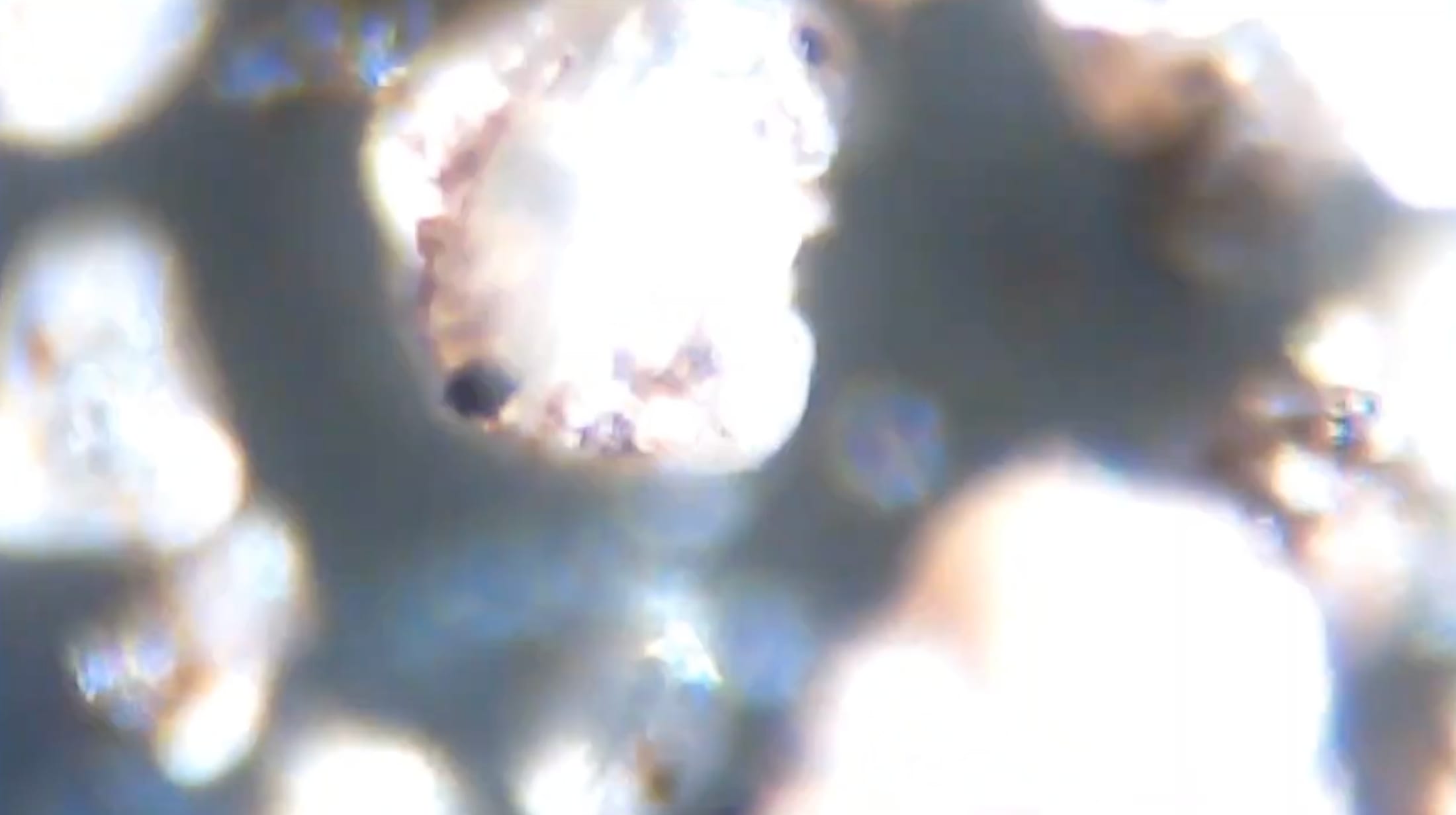
I was looking for traces of life. Under the lens, I found tiny particles in many colors and shapes, but not the life I was looking for. It was there, I learned later, only too small for my microscope: microorganisms breaking things down and turning them into something new.
The soil was no longer only something that holds the dead. It was a living environment in itself, and things continue to grow in it.
Radaye Siah
A turbah is a small tablet of soil used in Shia prayer; you place your forehead on it during prostration. Mine came from Karbala, where turbahs are made in large numbers from soil taken from the shrine of Imam Hussain. I have eaten turbah since childhood, and I still do from time to time. I love its taste and smell.
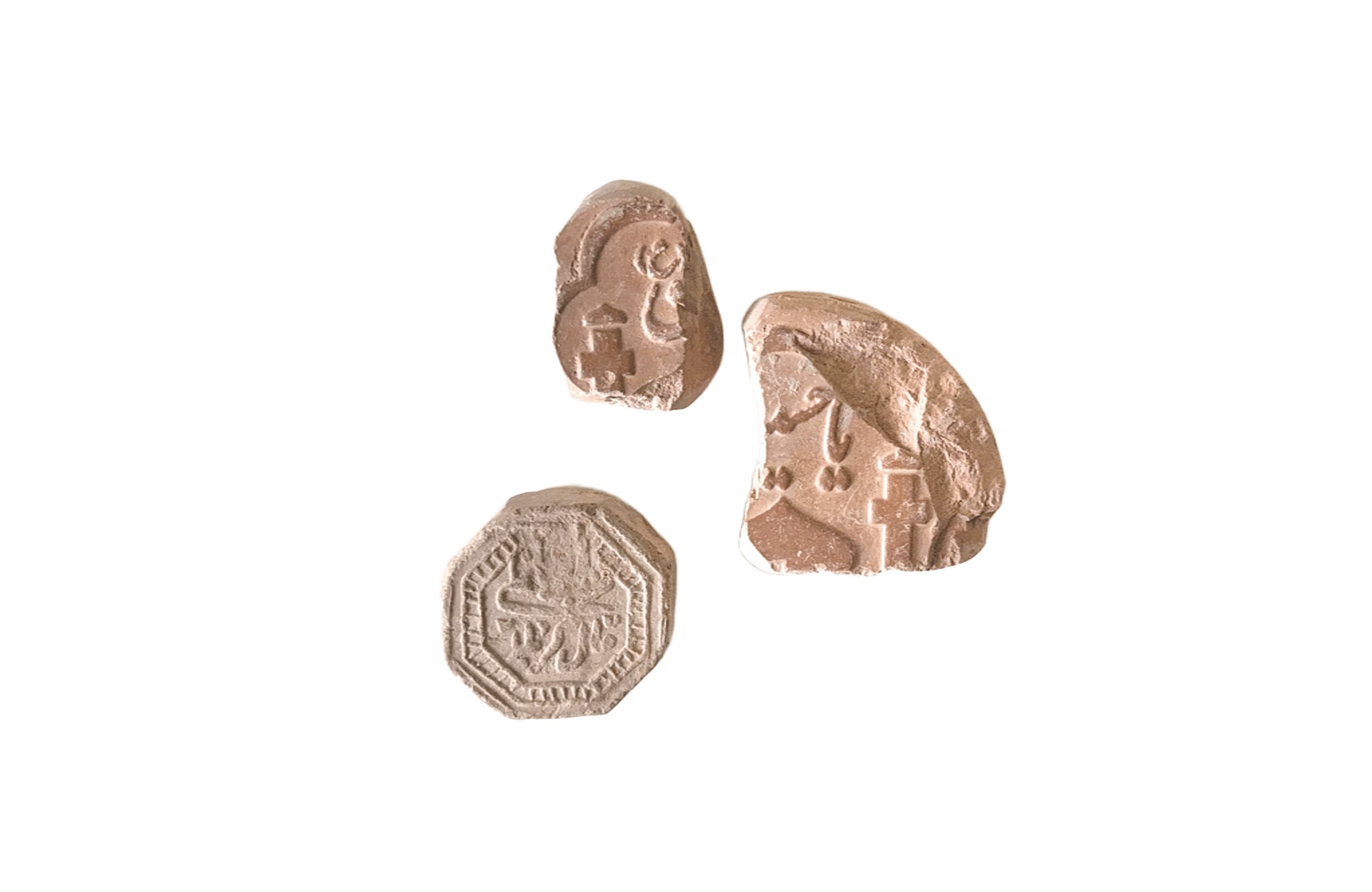
I began using it as a drawing material when I was wondering what I could make with it and noticed the marks it left on paper. It worked almost like a dry pastel.
Where I grew up, people wear black for 40 days after someone dies. I was experiencing the loss of my grandfather, and to me, each day had a shape. For 40 days, I drew with turbah on black cardboard: crying faces, graves, candles, mosques, and churches. I attached the drawings to black fabric and draped it like a chador over a female mannequin.
Making something every day became part of my practice. We live every day, and we die only once.
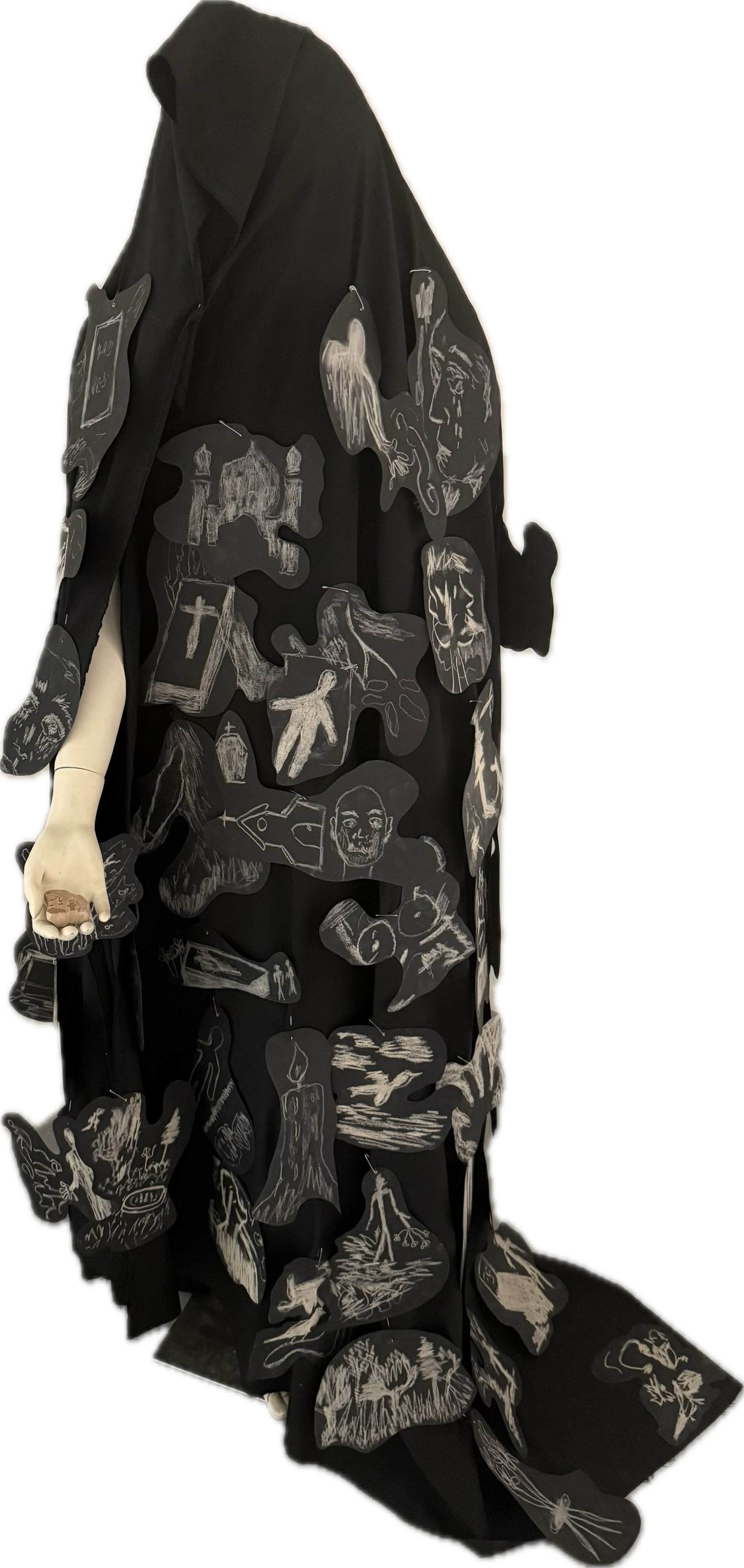
Radaye Siah, 2025. Turbah on black cardboard, linen, turbah. 180 × 50 cm.
Storylines
After the turbah drawings, I continued the daily practice of making, this time with soil from my garden, clay from a sand extraction site, and turbah. I worked on strips of paper, drawing trees and mountains with soil pigment. The strips already felt like storylines to me.
The soils came from very different places, but on paper they felt like one material. I was thinking about what could hold these different places together.
At first, I wove the strips together so their stories could meet. Later, I opened them up again, allowing each strip to exist on its own.
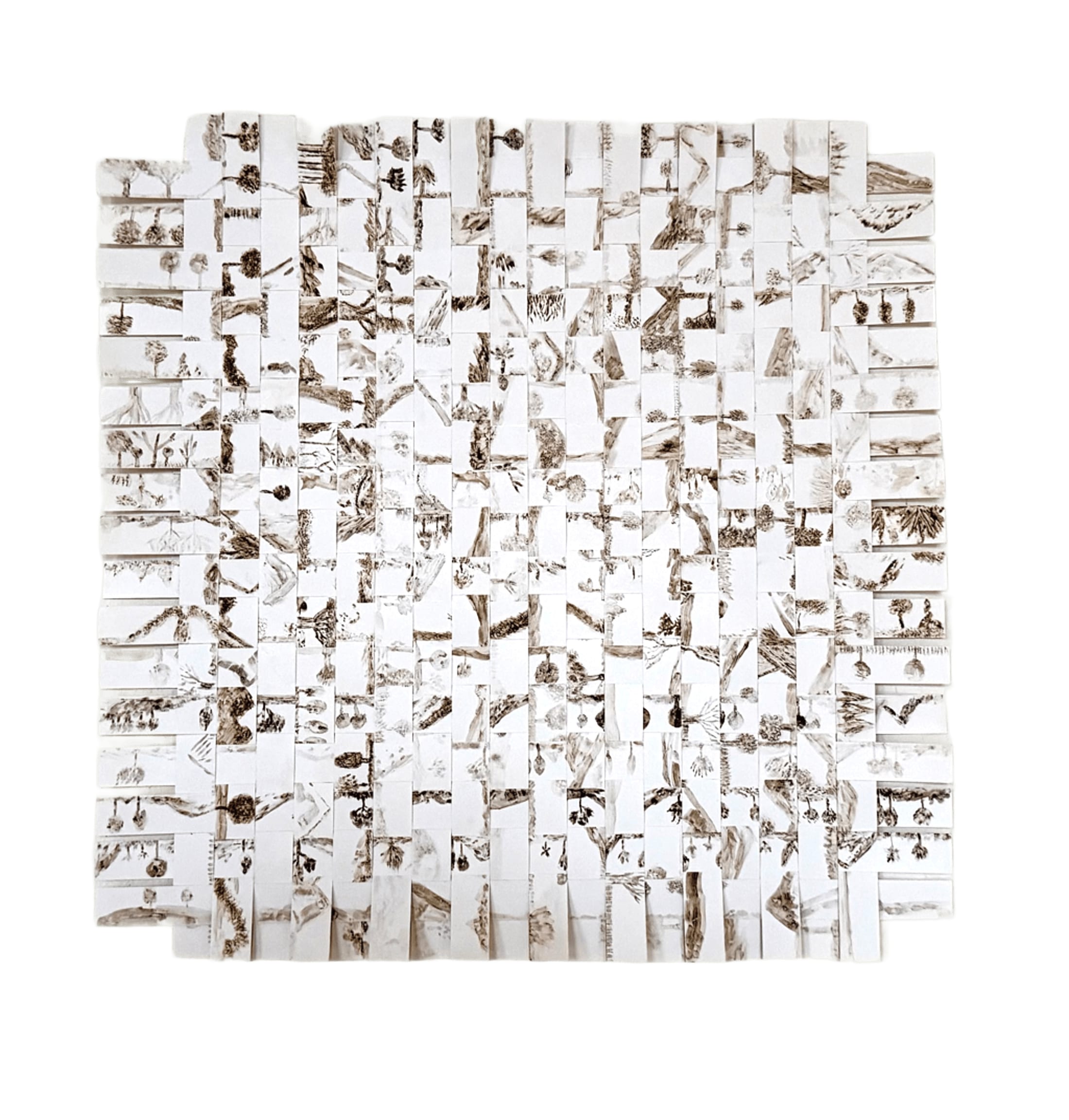
Storylines, 2025. Soil on paper. 44 × 34 cm.
I drew trees intuitively, thinking about how the dead become food for what grows. I drew mountains because I grew up beneath them, and here in the Netherlands there are none.
The daily process became meditative. At the same time, I began questioning my own role in working with soil. Before I could use the garden soil, I left it on newspaper in the open air so the worms and insects living in it could find their way out. I was taking away their home. My attentiveness was not innocent.

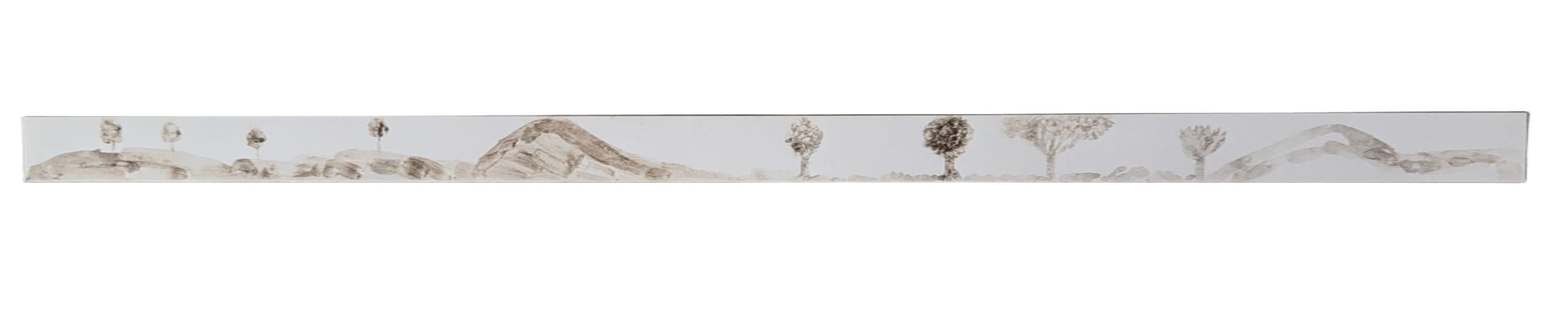
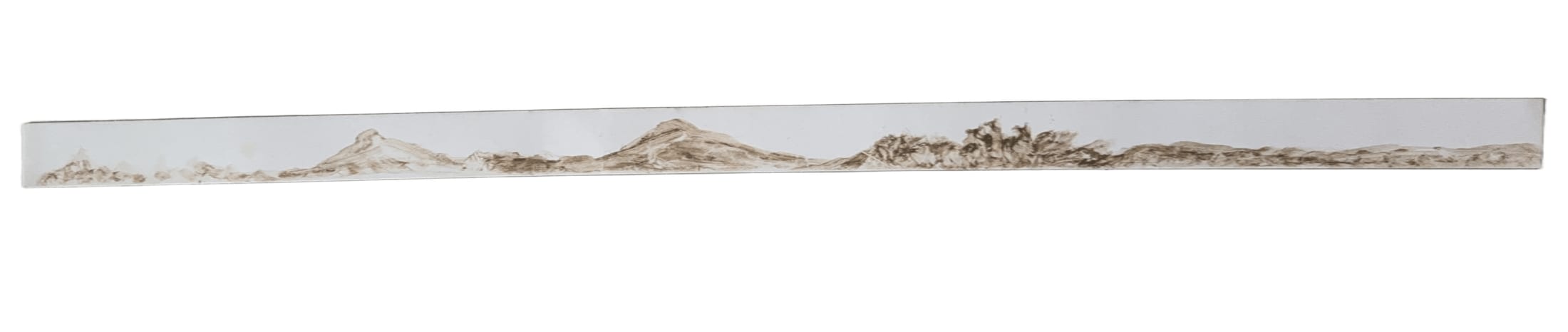













Storylines, 2025. Soil on paper. 2 × 44 cm each.
I Myself Grew From This Murky Soil.
In my earlier works, I kept using processed, factory-made paper. I wanted a surface that could be in dialogue with the soil, something from the same family. While researching, I came across the lotus. The flower rises from the mud towards the sun and blooms without being stained by it. In Buddhism, it stands for purity and awakening. That was what drew me to it.
The leaves I use were harvested, dried and imported to the Netherlands. I bought them in an Asian store, and I am aware that I am buying something extracted. But when I put them in water, they soften and open again, almost as if they come back to a different kind of life. I give them another purpose, and a different way to end.
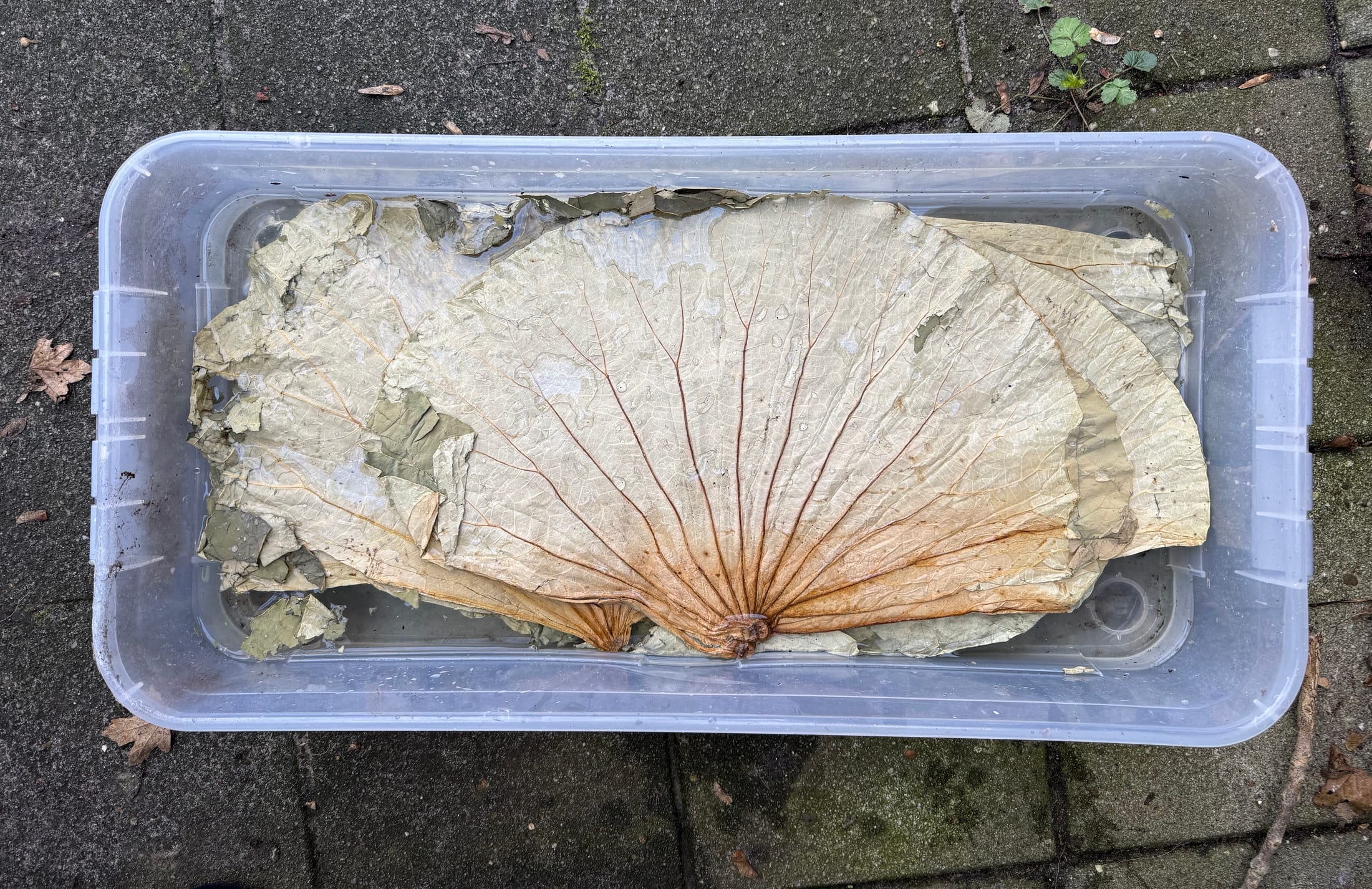
At first, I treated them the way I had treated the black cardboard in the turbah drawings. I wanted to step away from man-made tools and the fine, controlled lines they leave, so I did not use scissors. I tore the leaves by hand into smaller pieces. I drew on them with soil and left them. I was putting mud back onto a plant known for staying clean of it. Mold appeared, the leaves dried, and the drawings slowly faded with them. The leaf became a skin, and the soil an imprint.
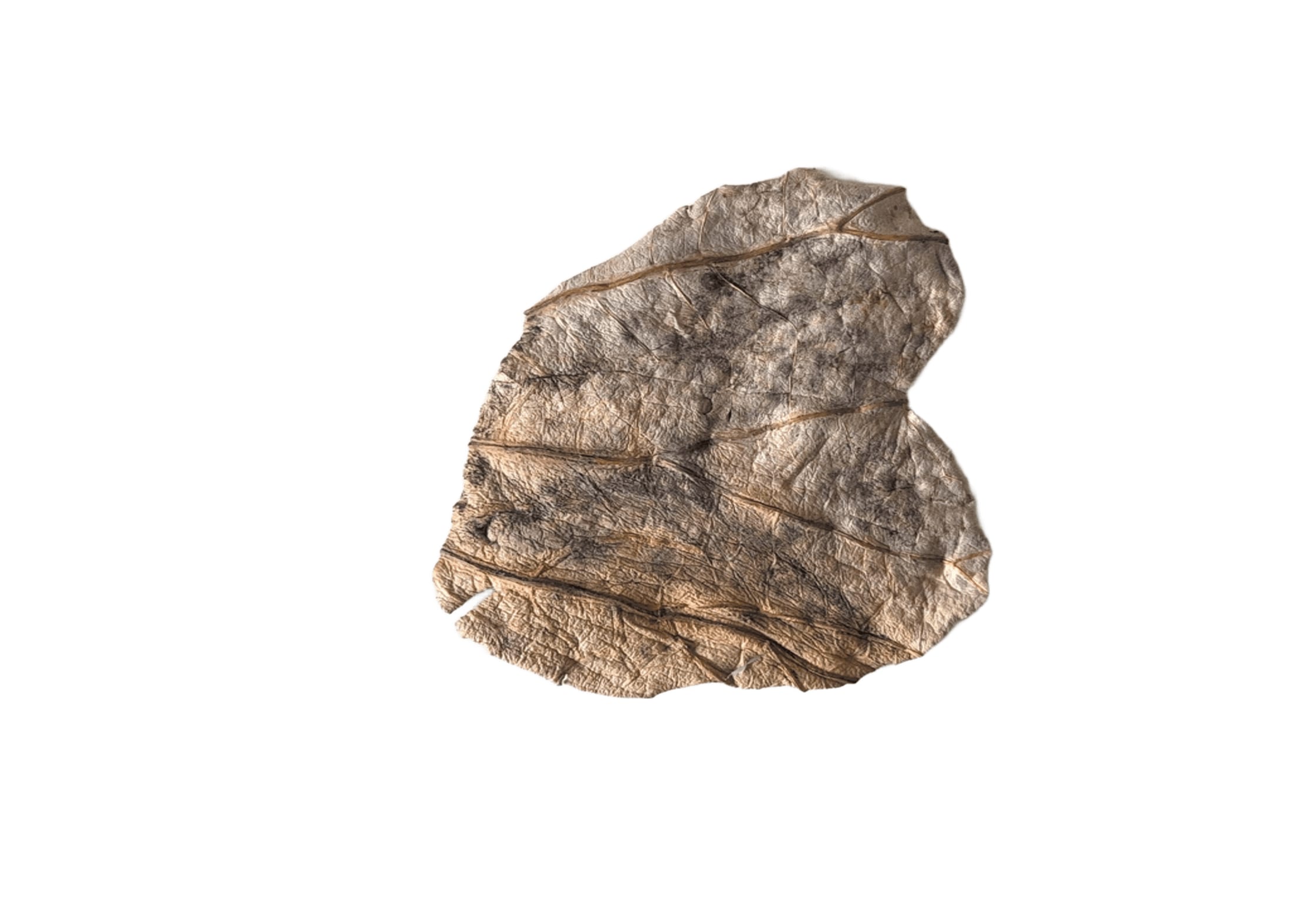
Untitled, 2026. Soil on lotus leaves. Variable size.
1 / 10In the next set, I covered the leaves with glycerin before drawing on them, as an act of preservation. They stayed well, with the drawings still on them.
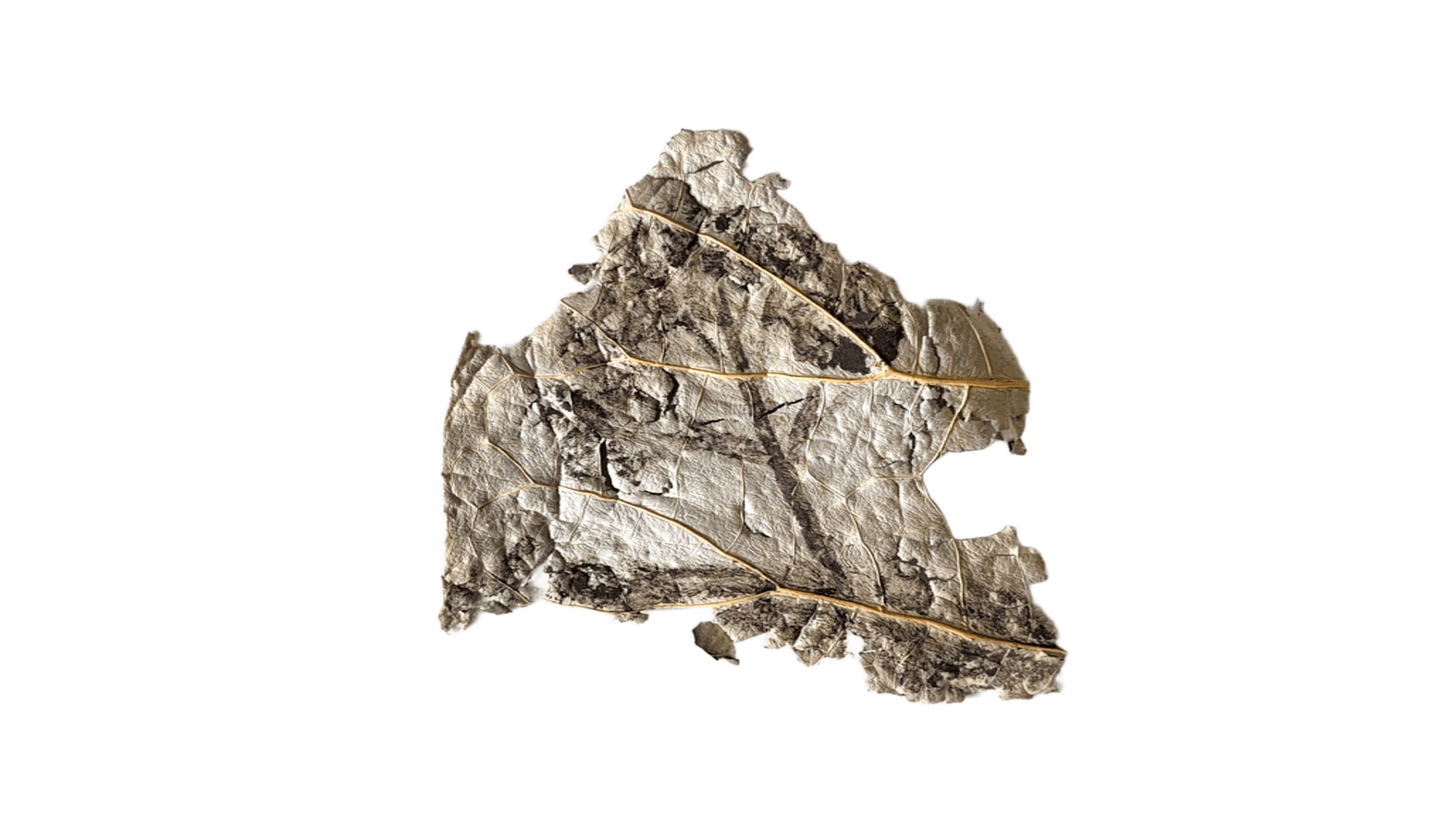
Untitled, 2026. Soil on lotus leaves covered in glycerin. Variable size.
1 / 8Then I began working with whole leaves. I drew on them with soil again, but this time I did not let them dry. I kept them moist so the mold could do more of the work. I was no longer letting go or holding on, but preparing the conditions. It became a collaboration between me, the soil, the water, and the mold. None of us is in full control.
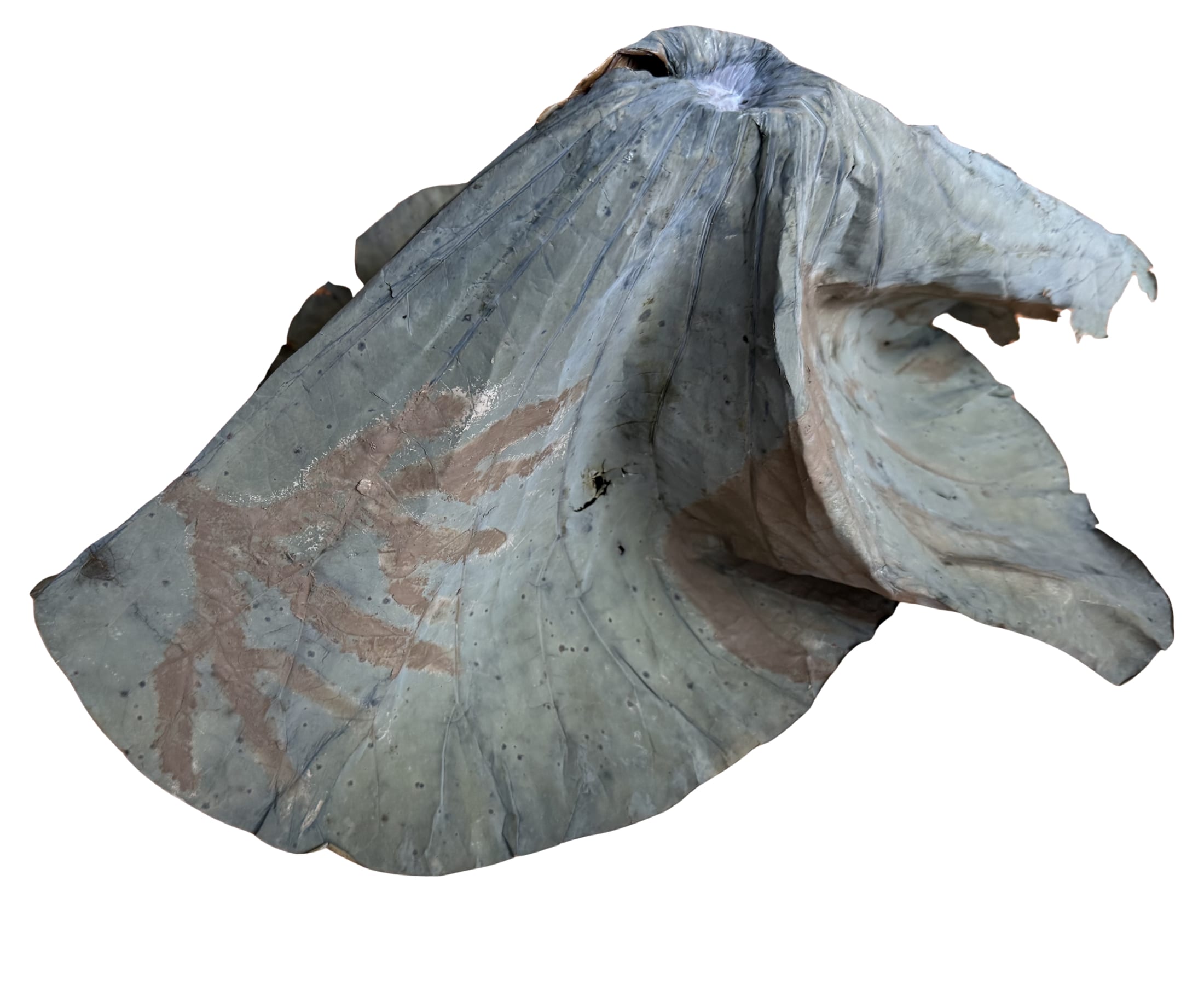
Untitled, 2026. Soil on lotus leaf.
My graduation exhibition took place in the A-kerk, a church in Groningen. I made an installation: a square filled with soil, with lotus leaves arranged in a circle, from slightly fresher leaves to torn ones to small pieces at the start of decay. In the middle of the garden soil, I placed cemetery soil, and during the exhibition, a small plant began to grow. The installation was interactive. People could touch and play with the soil, and it held their imprints. Next to it were the stairs to the pulpit, a place visitors are usually not allowed to enter. This time, I was the one speaking: the soundscape and the poem. By the end, the soil carried the traces of everyone who had played in it. Decay is not an end. It is transformation.
How am I to live
My world is dark and red
Overflowed with hollow hopes
Without a single motive
I walk through it
My feet feel the ground
But I do not
How am I to live
Caught between a bomb-raining superpower
and a gun-wielding dictator?
The sun behind a cloud does not deny its existence
Light is there, but only for the chosen ones
I turn to my body
An excavation within me
For me
So that the me-ness in me may sever
And reach to a we beyond
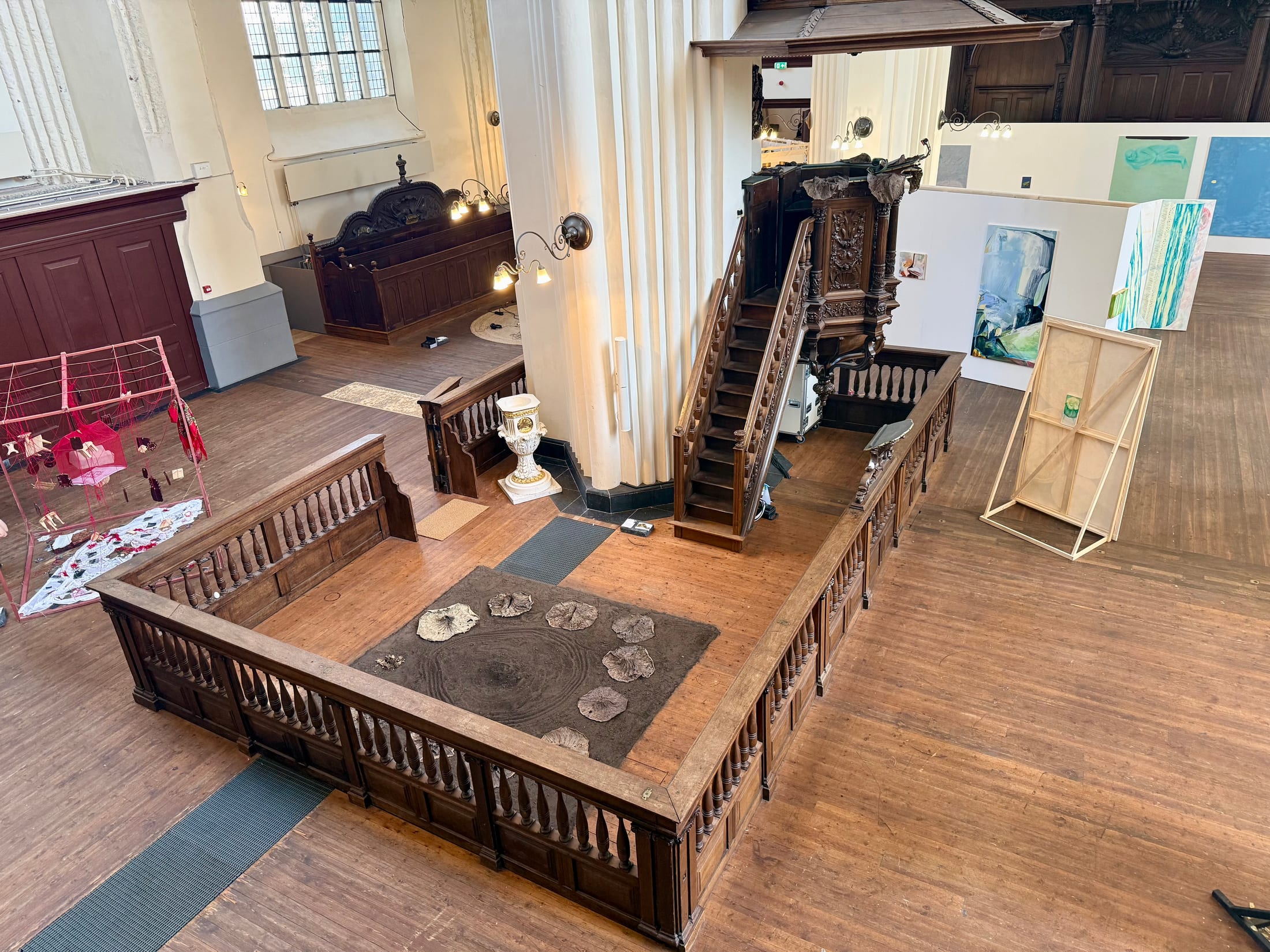
I Myself Grew From This Murky Soil, 2026. Gardening soil, soil on lotus leaves. 244 × 244 cm. Installation view.
1 / 6